
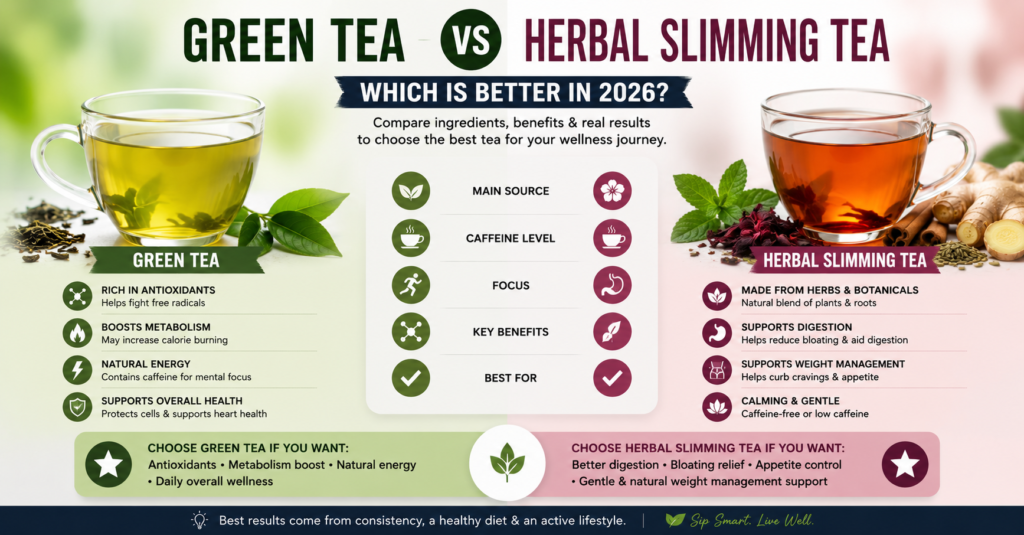
Green Tea vs Herbal Slimming Tea: Which Is Better in 2026?
Green tea vs herbal slimming tea has become one of the most searched wellness topics in recent years. Many people now use tea as part of healthier daily routines, especially when they want natural support for hydration, digestion, metabolism, and appetite awareness.
However, many consumers still feel confused about the difference between green tea and herbal slimming tea.
Do they work the same way?
Which option supports wellness goals better?
And which tea fits modern healthy lifestyle habits in 2026?
In this guide, we compare green tea vs herbal slimming tea, explain how they work, discuss common ingredients, and help you understand what realistic results actually look like.
Why Tea Became Popular for Weight Management
Many people prefer tea because it feels simple, natural, and sustainable. Unlike aggressive diet products, tea fits easily into everyday routines.
People often drink wellness teas to:
- Replace sugary beverages
- support hydration
- improve digestion
- reduce bloating
- encourage healthier habits
- support appetite awareness
As a result, both green tea for weight loss and herbal wellness teas continue growing in popularity worldwide.
Still, it’s important to keep expectations realistic.
No tea alone creates dramatic fat loss without balanced nutrition and healthy lifestyle habits.
What Is Green Tea?
Green tea comes from the leaves of the Camellia sinensis plant. Manufacturers process it differently from black tea, which helps preserve natural antioxidants called catechins.
Green tea also contains:
- caffeine
- polyphenols
- antioxidant compounds
Researchers continue studying green tea metabolism support because some evidence suggests it may slightly increase calorie burning and fat oxidation.
Green Tea Benefits
Many people choose green tea because of its natural antioxidant profile.
Potential green tea benefits may include:
- mild metabolism support
- increased hydration
- antioxidant support
- improved focus
- healthier beverage replacement
Some studies also suggest green tea may support energy expenditure when combined with balanced lifestyle habits.
However, the effects are usually modest rather than dramatic.
That’s why experts recommend viewing green tea as a supportive wellness habit instead of a miracle fat-burning solution.
What Is Herbal Slimming Tea?
Herbal slimming tea usually combines multiple plant-based ingredients designed to support digestion, hydration, appetite awareness, and overall wellness routines.
Unlike green tea, many herbal blends do not rely heavily on caffeine.
Common herbal slimming tea ingredients include:
- ginger
- peppermint
- cinnamon
- fennel
- dandelion
- hibiscus
- apple cider vinegar ingredients
- green tea extract
Some herbal teas also combine metabolism support tea ingredients with digestion-support herbs to create more balanced wellness blends.
Herbal Slimming Tea Benefits
Many people choose herbal tea for weight management because it often feels gentler and easier to drink daily.
Potential herbal tea benefits may include:
- digestion support
- reduced bloating
- hydration support
- appetite awareness
- healthier daily routines
Some individuals also prefer herbal wellness tea because certain blends contain lower caffeine levels than traditional green tea.
Again, results vary between individuals and depend heavily on overall lifestyle habits.
Green Tea vs Herbal Slimming Tea: Key Differences
Here is a simple comparison between green tea and herbal slimming tea.
| Feature | Green Tea | Herbal Slimming Tea |
|---|---|---|
| Main Ingredient | Tea leaves | Herbal blends |
| Caffeine Level | Moderate | Low to moderate |
| Focus | Antioxidants & metabolism | Digestion & wellness |
| Taste | Earthy | Varies by ingredients |
| Digestion Support | Mild | Often stronger |
| Appetite Awareness | Mild | Moderate depending on formula |
Both options may support healthy routines, but they work differently.
Which Tea Supports Metabolism Better?
Green tea metabolism support remains one of the most researched areas in wellness nutrition.
Because green tea naturally contains catechins and caffeine, researchers believe it may slightly increase calorie expenditure in some individuals.
However, many herbal slimming tea formulas now include:
- green tea extract
- ginger
- cinnamon
- metabolism-support herbs
As a result, some modern herbal blends combine digestion support with metabolism support in one product.
That’s one reason herbal wellness blends continue gaining popularity in 2026.
Which Tea Helps Digestion More?
When comparing detox tea vs green tea, digestion support becomes an important factor.
Herbal slimming tea often contains ingredients traditionally associated with digestion support, such as:
- peppermint
- ginger
- fennel
- cinnamon
These herbs may help:
- reduce bloating
- improve comfort after meals
- support hydration
- encourage consistent wellness habits
Green tea may still support overall wellness, but many people find herbal blends more soothing for digestion.
Which Option Fits Long-Term Wellness Goals?
Long-term wellness usually depends on consistency and sustainability.
Many people stop restrictive diets quickly because they feel difficult to maintain. Tea routines, however, often feel easier to continue daily.
Both green tea and herbal wellness tea may support:
- healthier beverage choices
- hydration
- mindful eating habits
- balanced wellness routines
The best option often depends on:
- caffeine sensitivity
- taste preference
- digestion needs
- lifestyle habits
What About Modern Wellness Blends Like Cardio Slim Tea?
Modern wellness products now combine several herbal slimming tea ingredients into one formula designed to support daily routines.
For example, blends like Cardio Slim Tea often include ingredients associated with:
- digestion support
- hydration
- appetite awareness
- metabolism support
- natural wellness habits
Instead of promising unrealistic overnight transformations, many newer herbal tea blends now focus more on balanced wellness support.
That approach aligns much better with sustainable health habits in 2026.
Common Mistakes People Make With Wellness Teas
Many consumers expect tea alone to create dramatic changes.
That expectation often leads to disappointment.
Tea works best when people combine it with:
- balanced meals
- movement
- hydration
- sleep
- consistency
Another common mistake involves choosing products with exaggerated marketing claims.
Consumers should avoid teas that promise:
- instant fat burning
- overnight weight loss
- miracle detox results
Real wellness improvements usually happen gradually.
Final Verdict: Green Tea vs Herbal Slimming Tea
So, when comparing green tea vs herbal slimming tea, which option is better?
The answer depends on personal goals and preferences.
Green tea may provide:
- antioxidant support
- mild metabolism support
- energy balance
Herbal slimming tea may provide:
- digestion support
- hydration
- appetite awareness
- balanced wellness routines
Many modern wellness blends now combine ingredients from both approaches to create more complete daily wellness support.
Products like Cardio Slim Tea reflect this growing trend toward realistic, sustainable wellness routines instead of aggressive quick-fix marketing.
In 2026, the smartest approach remains: consistency, healthy habits, and realistic expectations.
FAQ
Is green tea better than herbal slimming tea?
Green tea may provide stronger antioxidant and metabolism-support benefits, while herbal slimming tea often focuses more on digestion and wellness support.
Does green tea help with weight management?
Green tea may support metabolism and hydration as part of balanced lifestyle habits, but results are usually modest.
What ingredients are found in herbal slimming tea?
Common ingredients include ginger, peppermint, cinnamon, fennel, hibiscus, and green tea extract.
Can herbal slimming tea replace green tea?
Some people prefer herbal slimming tea because it often contains lower caffeine levels and additional digestion-support ingredients.